+880 1628-296566
24/12/2025
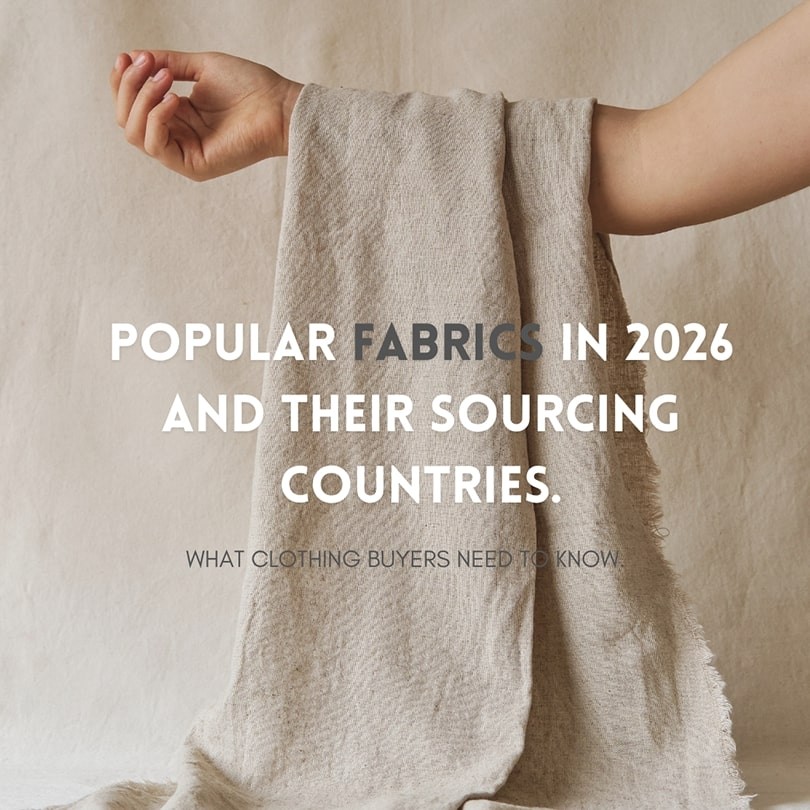
As we move into 2026, fabric sourcing is becoming one of the most strategic decisions in the apparel business. Buyers are no longer selecting materials based only on price and appearance. Sustainability, performance, traceability, and supply chain stability are now equally important.
Understanding which fabrics are gaining popularity and where they are best sourced can help buyers reduce risk, improve margins, and align better with brand values.
One of the strongest trends continuing into 2026 is the demand for organic cotton and eco-certified cellulosic fibers. Organic cotton remains a trusted choice for comfort-focused categories such as basics, innerwear, and casualwear. Alongside it, fibers like lyocell, Tencel, and modal are increasingly preferred due to their softness, breathability, and reduced environmental impact. India leads in organic cotton production, Turkey remains a key supplier for European brands due to quality consistency, Bangladesh is rapidly strengthening its certified fabric base, and China continues to support large-scale blended fabric production.
Recycled polyester and sustainable synthetic blends are now firmly established across multiple product categories. From activewear to everyday essentials, brands are shifting away from virgin polyester toward recycled alternatives made from post-consumer and industrial waste. China continues to dominate this space due to its scale and recycling infrastructure, while Vietnam is gaining buyer confidence with competitive pricing and improving compliance. India and South Korea play an important role in supplying higher-value recycled yarns and specialty blends.
Performance and functional fabrics are no longer limited to sportswear. In 2026, buyers are expected to source fabrics that offer moisture management, stretch, odor control, and temperature regulation even for casual and workwear categories. South Korea leads in innovation-driven performance textiles, Japan is known for premium technical fabrics and finishing excellence, and China and Taiwan support global demand with reliable, high-volume production.
Natural lightweight fabrics are also seeing renewed interest, especially for spring and summer collections. Linen, voile, and ramie are valued for their breathability, comfort, and natural texture. Premium linen continues to come from Italy, Belgium, and the Netherlands, while China and India offer scalable and cost-effective production options for blended and commercial ranges.
Another emerging area in 2026 is biodegradable and bio-based materials. Fibers made from algae, fungi, pineapple leaves, and other agricultural byproducts are gaining attention among sustainability-driven and premium brands. While still limited in volume, these materials are becoming important for innovation-led collections. Italy and Spain are leading in material development, with Southeast Asian countries such as the Philippines and Indonesia supplying key raw materials.
Digital printing and on-demand fabric production are also changing how buyers approach sourcing. These technologies allow shorter lead times, lower waste, and better inventory control. China and South Korea lead in advanced digital textile printing, while Turkey and Portugal are becoming strong near-shore options for European buyers.
For clothing buyers, the takeaway is clear. Fabric sourcing in 2026 requires a balanced approach that combines sustainability, performance, cost efficiency, and supply chain resilience. Diversifying sourcing countries, working with certified suppliers, and staying informed about material innovation are now essential, not optional.
Fabric is no longer just a material choice. It is a strategic business decision.
I would be interested to hear from fellow buyers and sourcing professionals.
Which fabrics are you prioritizing for your 2026 collections?