+880 1628-296566
3/1/2026
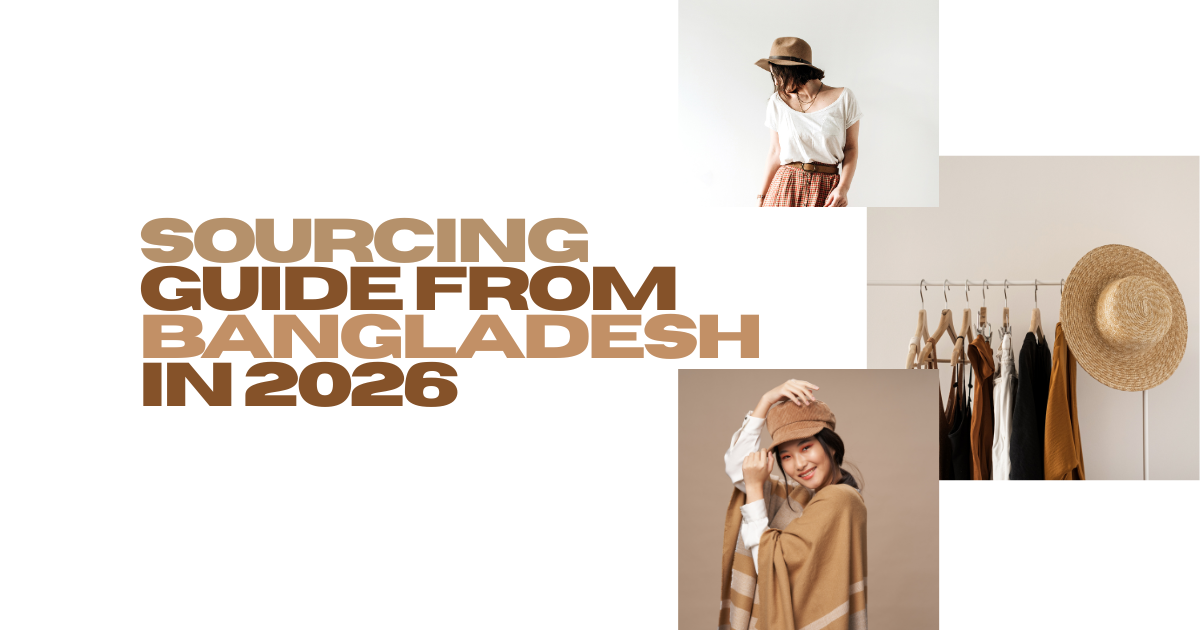
Bangladesh remains one of the world’s most competitive and dependable apparel sourcing hubs. In 2026, the country offers more than cost efficiency; it delivers compliance, scalability, transparency, and innovation. For global buyers seeking long-term sourcing partnerships, understanding the right process is key to mitigating risk and ensuring consistent quality.
This step-by-step guide outlines how to source garments from Bangladesh with confidence and control.
Before engaging suppliers, successful buyers align internally on:
Clear sourcing objectives reduce miscommunication and set the foundation for efficient supplier selection.
In 2026, Bangladesh offers a diverse manufacturing ecosystem, ranging from vertically integrated groups to specialized niche factories.
Key criteria to evaluate:
Working with factories aligned to your product DNA significantly improves consistency and speed to market.
Compliance is no longer optional; it is a baseline expectation.
Reputable Bangladeshi factories typically hold:
Buyers should request recent audit reports, corrective action plans, and third-party verification to ensure transparency.
A strong sourcing partner demonstrates excellence in:
In 2026, top factories in Bangladesh leverage 3D sampling, digital tech packs, and PLM systems, reducing development time and cost while improving accuracy.
Quality garments start with quality inputs.
Leading manufacturers now offer:
Buyers increasingly prioritize supply chain visibility, and Bangladesh has made notable progress in transparent material sourcing.
Before bulk production:
Proactive pre-production alignment prevents costly rework and shipment delays.
Professional sourcing in 2026 relies on multi-stage quality checks, including:
Many global buyers now work with independent QA teams or local sourcing offices in Bangladesh to maintain real-time oversight.
Bangladesh is now home to the highest number of LEED-certified green garment factories globally. Buyers sourcing in 2026 can access:
Sustainability is no longer a marketing claim; it is an operational reality for forward-thinking suppliers.
Efficient sourcing includes:
With improved port infrastructure and digital documentation, Bangladesh offers more predictable lead times than ever before, when planned correctly.
The most successful global buyers in Bangladesh focus on:
Long-term partnerships unlock better pricing, priority capacity, and continuous improvement, far beyond short-term sourcing wins.
Bangladesh has evolved from a low-cost manufacturing hub into a quality-driven, compliance-focused, and sustainable sourcing destination. Buyers who follow a structured sourcing approach gain access to:
Sourcing success in 2026 is not about finding the cheapest factory, it is about choosing the right partner.
Trust in sourcing is built through process, transparency, and partnerships. Bangladesh offers all three when navigated with expertise and intention.